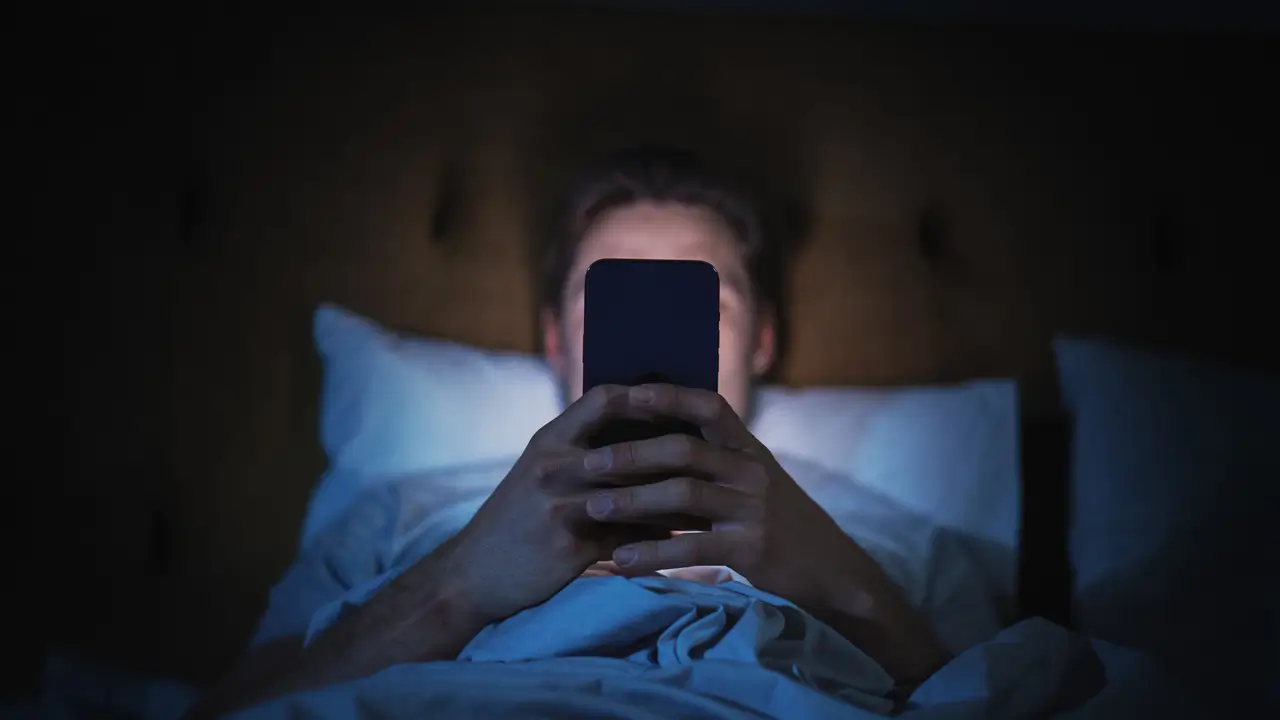
You already know you should turn off your phone before bed. You’ve heard it a hundred times. Blue light is bad; melatonin is good. Screen off, sleep on. Simple, right?
Except it’s not that simple. Not for you.
Because you’re not just some random person trying to wind down after a Netflix binge. You’re an athlete. Your nervous system has been chemically amped by pre-workout, physically hammered by training, and psychologically wound up by competition or the pressure to perform.
Turning off your phone at 10 p.m. is cute, but it’s not going to undo the 300 mg of caffeine still circulating in your veins.
This athlete’s guide to sleep hygiene isn’t about basic tips you learned in high school health class. It’s about building a comprehensive system that accounts for training load, stimulant metabolism, travel chaos, and the unique physiological demands of those who push their bodies to the limit.
Welcome to the advanced course.
Let’s start with an uncomfortable truth.
Research shows that athletes average only 6.5 hours of sleep per night, compared with 7.11 hours among non-athletes. That’s right, the people who need more recovery are actually getting less sleep than the general population.
What is the recommended sleep duration for athletes?
| Sport Type | Recommended Sleep | Napping Strategy |
| Endurance (running, cycling, triathlon) | 8–10 hours (9+ during intense training) | 20–30 min, early afternoon only |
| Strength (weightlifting, CrossFit) | 8–9 hours (9–10 during high-volume) | 20–40 min, avoid late naps |
| Team Sports (soccer, basketball, hockey) | 8–10 hours | 20–90 min on match days |
| Combat Sports (MMA, boxing, wrestling) | 8–9 hours (9–10 during prep) | 20–30 min, early afternoon |
Yet despite these targets, 50 to 78 percent of athletes experience sleep problems. A 2024 study of 1,603 Team USA athletes found that nearly 40% reported poor sleep.
The gap between what athletes need and what they receive isn’t a character flaw. It’s a design flaw in how we think about recovery.
Let’s geek out on physiology for a minute because understanding why sleep matters makes it easier to prioritize.
Sleep isn’t just “being unconscious.” It’s an active physiological process that cycles through stages every 90 minutes or so. The deepest stage—slow-wave sleep (NREM stage 3)—is where the magic happens for athletes.
During deep sleep:
Skimp on deep sleep, and you’re leaving gains on the table. Research shows that insufficient sleep leads to more errors, impaired decision-making, reduced power, and heightened fatigue. You get sick more often, recover more slowly, and perform worse.
Sleep isn’t optional. It’s the third pillar of athletic performance, alongside training and nutrition.
Let’s build a real system. Think of sleep hygiene as a pyramid—you need to nail the foundation before the advanced stuff matters.
Before you spend a dime on supplements or gadgets, get your sleep environment right.
Temperature matters. Your body needs to cool down to initiate sleep. Keep your room between 60-70°F (16-21°C).
Darkness isn’t optional. Remember the suprachiasmatic nucleus (SCN)—that cluster of neurons behind your eyes that regulates your circadian rhythm? It’s incredibly sensitive to light. Even small light leaks can signal your brain to suppress melatonin. Blackout curtains aren’t a luxury; they’re a tool.
Noise control. The Olympic Village in PyeongChang had “paper-thin” walls, recalls mogul skier Tess Johnson. Her solution? White noise and noise-cancelling headphones. Take the hint.
Bring your own gear. Cyclists on the Ineos Grenadiers team travel with their own dehumidifier, mattress, duvet, and pillow. Every. Single. Day. That’s extreme, but the principle applies: if you’re sleeping in unfamiliar places, control what you can. Tennis player Neal Skupski swears by bringing his own pillow because “some mattresses are hard, some soft,” and “pillows can mess you up.”
Consistency beats perfection. You don’t need to sleep exactly 8 hours every night, but keeping a consistent wake-up time is more important than bedtime for anchoring your circadian rhythm. Wake up at roughly the same time each day and get natural light exposure immediately.
The pre-sleep wind-down. Create a “protected time” for your body to prepare for sleep—ideally 1-2 hours of dim lights, no screens, and calming activities. This could include:
Olympic skier Julia Kern uses visualization when her mind won’t shut up after a race: she imagines she’s in bed at home, pictures a blank space, or practices box breathing.
Napping: the double-edged sword. Naps are powerful but dangerous if done wrong.
| Do | Don’t |
| Nap 20-40 minutes max | Nap longer than 90 minutes |
| Nap before 3 p.m. | Nap late in the evening |
| Use naps strategically on high-training days | Nap to compensate for consistently poor nighttime sleep |
Sleep expert Remi Mobed warns: “You’ve got this napping vicious cycle—sleeping too much in the day can actually completely put out your rhythm”.
This is where athletes separate from the general population.
Caffeine has a half-life of 4-6 hours, meaning it takes that long for half of it to leave your system. If you consume 300mg in your pre-workout at 6:00 p.m., you’ll still have 150mg circulating at 11:00 p.m.
Skupski learned this the hard way: “I was waking up in the middle of the night and thinking, ‘why am I wide awake?’ I was having coffee too late at night, having dinner, and then a coffee around 7 or 8 pm”.
The rule: no caffeine after 3-4 p.m. For some sensitive individuals, you may need a noon cutoff.
Alcohol might help you fall asleep, but it fragments sleep architecture and prevents you from reaching deep, restorative stages. If you’re serious about recovery, serious drinking and serious sleep don’t mix.
A high-tryptophan meal 2-3 hours before bedtime can support sleep. Think turkey, dairy, fish, poultry, beans, or leafy greens. The goal is to provide precursors for serotonin and melatonin without digesting a heavy meal while you’re trying to sleep.
Limit fluids close to bedtime to avoid middle-of-the-night bathroom trips. This seems obvious, but is frequently overlooked.
Once your foundation is solid, specific nutrients can help bridge the gap.
Magnesium is critical for neuromuscular function and autonomic recovery. Research links magnesium supplementation to lower cortisol levels, helping calm the central nervous system and potentially improving both sleep duration and quality.
The form matters. Magnesium L-threonate is unique because it crosses the blood-brain barrier effectively. An ongoing UCLA study is examining whether magnesium L-threonate can improve deep sleep, REM sleep, heart rate variability, and recovery in collegiate athletes. Early evidence suggests forms that reach the brain may offer advantages over standard magnesium.
Tart cherry juice is a natural source of melatonin. Studies have shown that it can improve sleep quality compared to control groups. A 2025 scoping review highlighted tart cherry juice as one of the nutritional interventions with the “highest potential” to promote sleep in elite athletes.
The same 2025 review identified kiwifruit and high dairy intake (specifically in women) as promising sleep-promoting foods. The mechanisms aren’t fully understood, but antioxidants and serotonin precursors likely play a role.
Here’s a fascinating nuance: tryptophan supplementation “may hold promise,” but there appears to be a ceiling effect in elite athletes consuming over 2.5g of protein per kg of body mass. When protein intake is already high, tryptophan competes with other large neutral amino acids for transport across the blood-brain barrier. More isn’t always better.
Travel is the great sleep disruptor. Early morning training, late-night competitions, time zones, and unfamiliar environments compound every problem we’ve discussed.
“When you’re jumping three time zones, your body is able to cope with it,” says Mobed. “On top of that, it takes an athlete one day per hour that they’ve travelled to adjust”. For a 12-hour time difference, expect about 9 days for full adjustment (the first three hours are manageable, plus one day per remaining hour).
Andy Murray’s approach to the Tokyo Olympics? He shifted his sleep schedule a week in advance, waking at 2:00 a.m. UK time to align with Japan. Extreme? Yes. Effective? Also, yes.
Data shows athletes sleep better before competition than after. Pre-competition, they go to bed earlier, wake up later, and sleep longer. Post-competition? Total sleep time drops to around 5 hours and 51 minutes.
Why? Elevated adrenaline and cortisol, muscle soreness, and psychological rumination, replaying the performance, thinking about what could have been. Plus, caffeine consumption is significantly higher on competition days.
In team sports, sharing hotel rooms with teammates is common. But Mobed argues that this is counterproductive: “The hotel room should be a place that is sacrosanct for the athletes to be in a relaxed state.” If you can’t control rooming assignments, at least request compatibility—morning larks with morning larks, night owls with night owls.
Here’s where we get meta.
Sleep trackers are everywhere now. They can be useful—but they can also become a source of anxiety.
Emily Clark, a psychologist for the U.S. Olympic & Paralympic Committee, warns: “Vigilance around sleep is counterproductive to sleep”. Athletes comparing sleep scores, competing over who slept better, or waking up and being told they slept poorly when they feel fine—none of this helps.
Tess Johnson experienced this firsthand: “Waking up and being told I slept poorly when, actually, I felt fine” wasn’t worth the stress. Her solution? Stop checking.
The USOPC sleep guidelines note something important: “One night of poor sleep is rarely enough to derail your performance when you have adrenaline on your side and good sleep banked from prior nights”.
Psychologist Jim Doorley advises athletes to cultivate a “childlike relationship to sleep”—sleep when tired, don’t overthink it. “Letting go is essential,” he says.
Johnson agrees: “I’ve gotten some of my best results on, like, four hours of sleep, probably”.
The goal isn’t perfect sleep every night. The goal is resilience—building enough sleep banked on good nights that the bad nights don’t sink you.
You’ve optimized your environment. You’ve nailed your routine. You’ve timed your caffeine, dialed in your nutrition, and stopped checking your sleep score. Your room is dark, cool, and quiet.
And still, sometimes, the stimulant load is too high. Your nervous system is buzzing, and willpower alone won’t power it down.
This is where DISCONNEKT® comes in.
DISCONNEKT isn’t a substitute for sleep hygiene. It’s the final tool in the arsenal—the one you deploy when the foundation is solid, but your nervous system needs backup.
The formulation addresses everything we’ve discussed:
Each ingredient targets a different aspect of the sleep cascade. Together, they create a multi-pronged approach to quieting the stimulant-driven wakefulness that makes athletes stare at ceilings at 2:00 a.m.
Think of it this way: sleep hygiene builds the runway. DISCONNEKT helps you land the plane.
Here’s your complete system:
Sleep hygiene for athletes isn’t about turning off your phone and hoping for the best. It’s a multi-layered system that respects your physiology, accounts for your training demands, and provides tools for every scenario.
The basics matter. Environment, routine, nutrition, these are the foundations, and you can’t skip them.
But for the athlete who’s done everything right and still finds themselves wired at midnight, there’s a place for something more.
You fuel your fire with pre-workout. You build your engine with training. Now finish the job with sleep that actually helps you recover.
Sleep well. Train hard. Repeat.
Most athletes need 8-10 hours of sleep per night, with endurance and team-sport athletes on the higher end and strength athletes in the 8-9-hour range. During intense training periods, some may need up to 9-10 hours.
Napping is beneficial when done correctly. Limit naps to 20-40 minutes, ideally before 3 p.m. Longer naps or late-afternoon naps can disrupt nighttime sleep.
Caffeine has a 4-6-hour half-life, meaning it stays in your system much longer than you feel its effects. Stop caffeine at least 6-8 hours before bedtime and consider a noon cutoff if you’re sensitive.
For athletes dealing with stimulant-driven wakefulness, targeted melatonin support—at appropriate doses like the 5mg in DISCONNEKT—can be used effectively as part of a complete sleep strategy. The key is that it doesn’t work on its own. It’s combined with GABA, L-theanine, tryptophan, and herbs that together help calm an overstimulated nervous system. This synergistic approach supports your body’s natural sleep process rather than overriding it.
There’s no single “best” supplement because sleep is complex. Magnesium (especially glycinate or L-threonate), tart cherry juice, and targeted multi-ingredient formulations each have evidence supporting their use. The key is to build a foundation of good sleep hygiene first, then add targeted support where needed.
Yes. Evening training elevates adrenaline, cortisol, and body temperature—all of which oppose sleep. If you must train late, prioritize a longer wind-down routine and consider sleep-supportive nutrition and supplementation.
Post-competition sleep is disrupted by elevated stress hormones, muscle soreness, and psychological arousal—replaying the event, thinking about what you could have done differently. Caffeine consumption is also typically higher on competition days. This combination makes it difficult to get quality sleep, even when you’re physically exhausted.
Trackers can provide useful data, but don’t obsess over them. Psychologists warn that “vigilance around sleep is counterproductive to sleep”. If tracking causes anxiety or you’re competing with teammates over scores, it’s doing more harm than good.